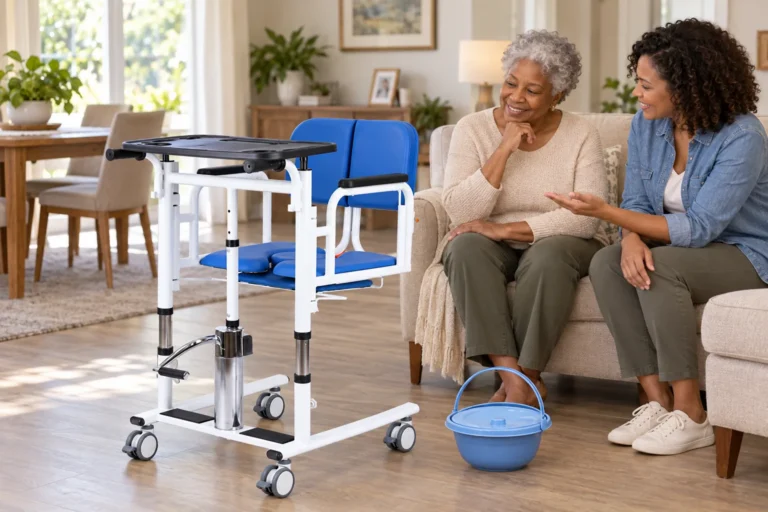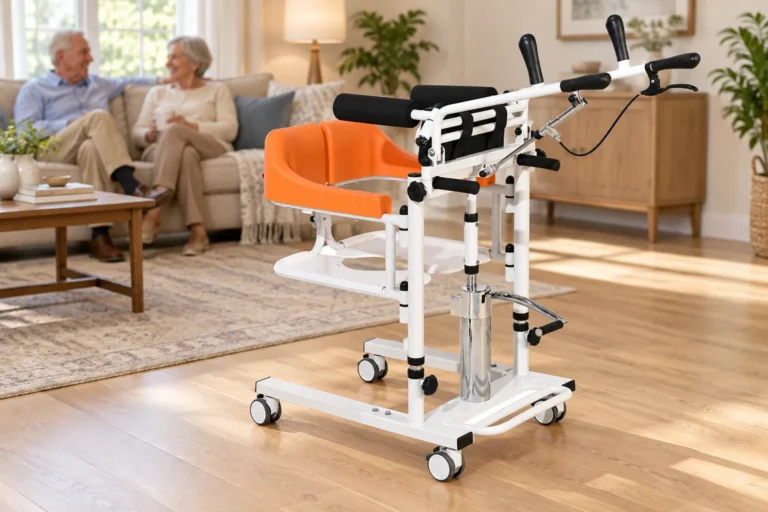
Before choosing a transfer chair, measure the narrowest opening on the route, the space beneath the bed and the room available to turn. Compare those figures with the manufacturer’s requirements for the exact model and option you are considering. A chair can clear the bedroom door and still have too little space to open beside the bed.
Measure the route from the bed to the doorway
Use one unit throughout your notes. Sketch the route as you walk it, including any corner where the chair needs to turn. Record each measurement beside the spot where you took it.
| Location | What to measure | What to compare |
|---|---|---|
| Doorway | Open the door as far as it normally goes. Measure the smallest clear gap along the path, including any projecting handle or trim. | Overall chair width in its intended travel configuration, plus the operating clearance the manufacturer specifies. |
| Hallway turn | Measure the open width on both sides of the corner. Mark radiators, furniture and thresholds on your sketch. | The model’s turning-space and floor requirements. |
| Under the bed | Measure from the floor to the lowest rail or crossbar along the proposed base path. Record how far the open space extends before a leg or drawer interrupts it. | The height, width and insertion depth of the base and casters. For an adjustable bed, record the bed position you measured. |
| Beside the bed | Record mattress-top height and free space between the bedside and the nearest wall or furniture. | The model’s working height range and room for the frame, seat sections and helper. |
Compare a manual chair, a powered chair and a sling lift
Manual or hydraulic split-seat chair. Ask how the seat sections open, what moves the height adjustment and where the helper must stand to reach the controls. On the hydraulic transfer chair listing, identify the configuration you want before requesting its dimensional drawing.
Powered split-seat chair. Check which adjustment the motor controls and whether the chair must still be pushed by hand. Ask about charging space and the clearance around the open seat. For the transfer and commode chair, specify the option you are comparing when asking about controls or included accessories.
Mobile sling lift. The person is supported by a compatible sling. Compare the base dimensions in the positions specified by the manufacturer, its reach around the bed and the space needed to maneuver. For the electric transfer lift, confirm the approved sling, size and package contents for the selected option.
Common fit questions
Can I use the width printed on the door label?
Use the actual open gap. The door slab, stop and hardware can reduce the space available to a chair. A straight-line width also leaves the turn into the room unanswered.
What if the bed has a low crossbar or storage drawers?
Mark the obstruction’s height and distance from the edge of the bed. Send those figures with the product link to product support and request a drawing showing how far the base must extend underneath.
Does a good room fit mean one person can operate the equipment?
Room fit answers a space question. Ask a qualified care professional about the person’s support needs, and check the model instructions for required assistance and training before choosing a device.