At home, the important moments are often the ordinary ones: catching the morning news, sharing a meal, or settling into a favorite chair. If you are considering an electric patient lift, start by asking how a particular model would fit those routines, the person receiving care, and the people helping them.
Powered lifting is one feature of a larger setup. The sling, room layout, controls, instructions, and available assistance all deserve attention. Before you put a lift on the shortlist, collect the details that a product photograph cannot answer.
Is this the right type of support?
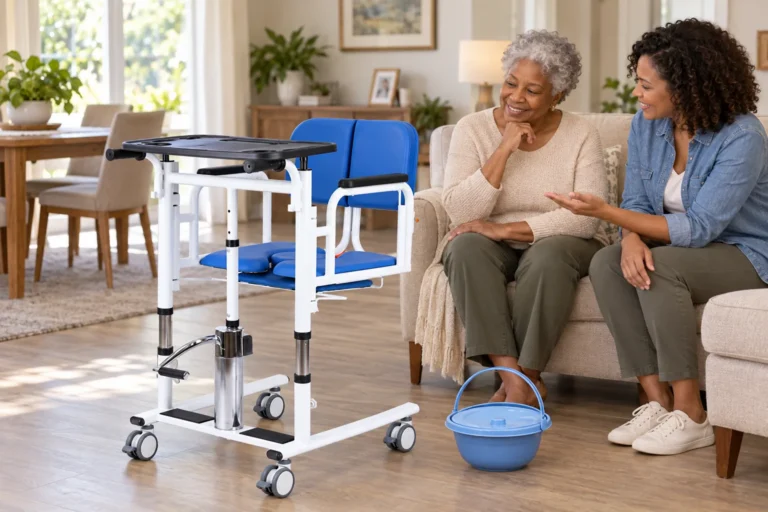
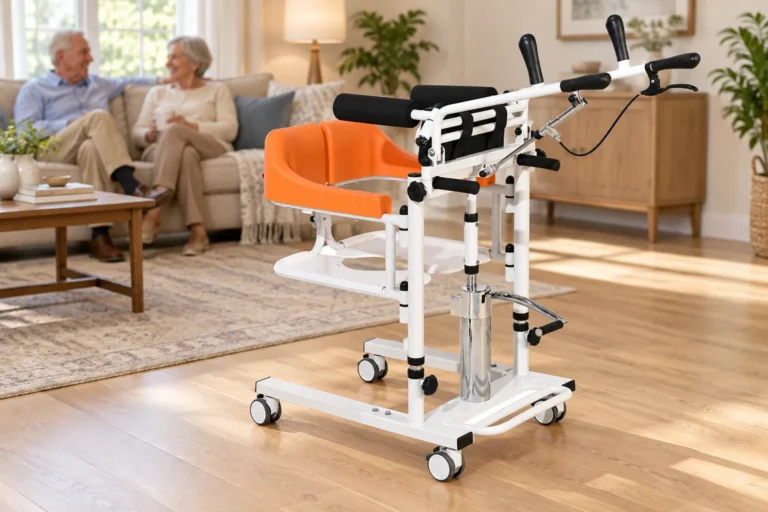
Discuss the person’s transfer needs with a qualified care professional and ask which equipment category is appropriate. A sling lift, a seated transfer chair, and a standing aid are different choices. Avoid treating them as interchangeable because they appear under the same broad shopping category.
Ask the seller for the instructions and exact model identification before ordering. That gives everyone involved a specific device to discuss, rather than a general description such as “electric lift” or “home mobility aid.”
Which sling and components are included?
A photograph may show a complete setup while the selected purchase option includes something different. Request an itemized list of what arrives in the box, including the sling if one is supplied. Ask how to identify the appropriate size and approved replacement components.
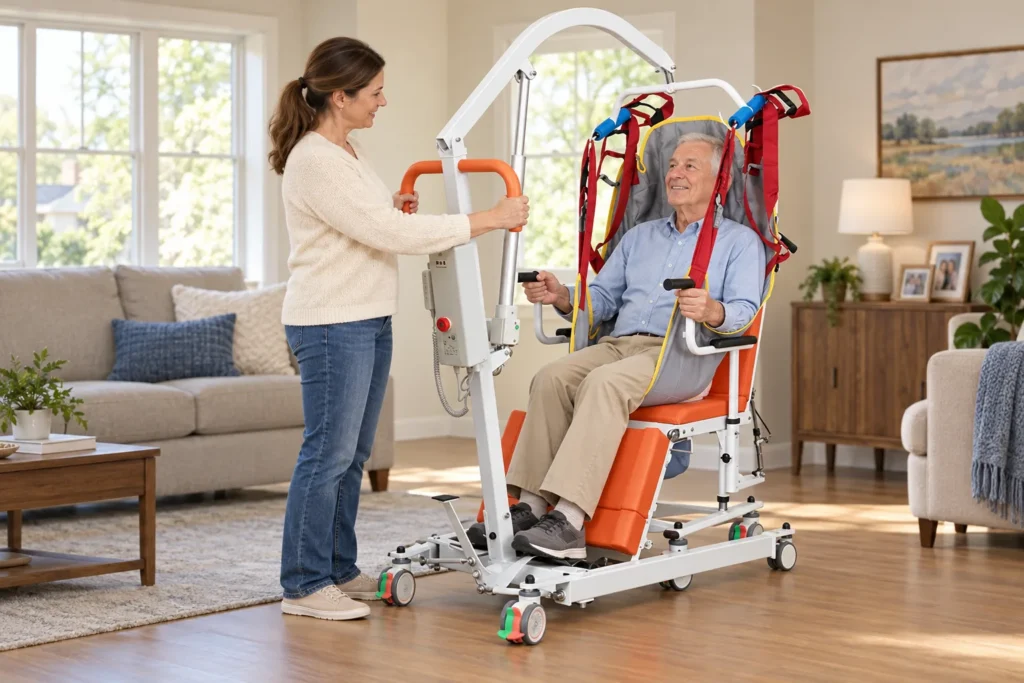
Patient-lift safety guidance calls for a sling approved for the particular lift, suitable for the person using it, and used within both sling and lift weight limits. Caregivers also need training and the manufacturer’s operating instructions. Appearance alone does not establish compatibility.
Will it work with your room layout?
Measure the furniture and spaces involved in the planned transfer. Ask about the base dimensions, required clearance, and working space for the caregiver. Include the doorway and route into the room. That cozy reading corner may need a little rearranging before a new piece of equipment moves in.
Consider where the lift will be kept when it is not in use. Ask whether any advertised storage feature applies to the exact model, and what its instructions require. Do not assume that a frame folds, fits beneath furniture, or travels easily based on photos of a similar device.
What does ownership look like after delivery?
Ask about the power supply, charging arrangements, maintenance schedule, and procedures provided for a loss of power. Request the instructions rather than improvising a backup plan. Also find out who handles product questions, how replacement parts are ordered, and what information support will need from you.
Some listings show walking-support handles or other optional equipment. Their appearance does not mean they are included, compatible with another model, or appropriate for a particular person. Confirm each component and intended use separately.
When reviewing an electric patient transfer lift, keep these questions beside the product details. Compare the documented configuration with your care professional’s recommendations and the measurements from your home. A clear answer before delivery is more useful than a pleasant surprise that turns out not to fit.