Morning coffee, a favorite armchair, Sunday dinner with the family: home care works best when it makes room for the everyday things that matter. Choosing a transfer and commode chair starts with those routines, along with the person who will use it. A long feature list is useful only when the features fit real life.
Before comparing models, make a short list of the places where help is needed. Moving between a bed and chair, accessing a toilet, and bathing are different tasks. A chair described as multifunctional should still come with clear instructions explaining exactly what each configuration is designed to do.

Start with the person, then the product
Ask a qualified care professional which type of transfer equipment suits the person’s current abilities and support needs. Bring the product instructions to that conversation. Being able to sit in a chair does not, by itself, establish whether a particular transfer method is appropriate. A listing or a photograph cannot make that assessment.
Include the person using the chair in the discussion whenever possible. Ask what feels comfortable, what feels awkward, and which daily routines they most want to keep. Practical preferences belong on the shopping list alongside equipment requirements.
Check the fit around familiar furniture
The favorite recliner gets a vote, too. Record its seat height and the space around it, then do the same for the bed and toilet. Ask the seller which dimensions matter for the exact chair you are considering, including any required clearance beneath furniture and room for its frame or seat to open.
Measure the route between those spots, not just the widest room. Door swings, narrow bathroom entrances, and furniture corners can change the picture. Send measurements or room photos to the seller rather than relying on a product photo taken in a spacious showroom.
Make the commode details clear
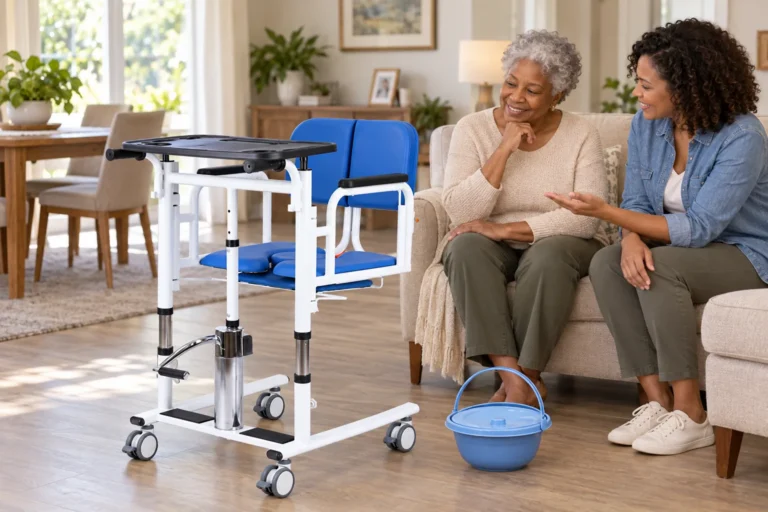
If toileting is part of the plan, confirm the intended setup, seat arrangement, cleaning instructions, and included accessories. Ask whether a commode container or other component is supplied with the selected option or ordered separately. Also check how replacement parts are identified and obtained.
Do not assume that a commode chair is suitable for shower use. Request written confirmation for the exact model and configuration. Hydraulic and electric versions can also differ, so make sure the instructions you receive belong to the option in your cart.
Turn the shortlist into useful questions
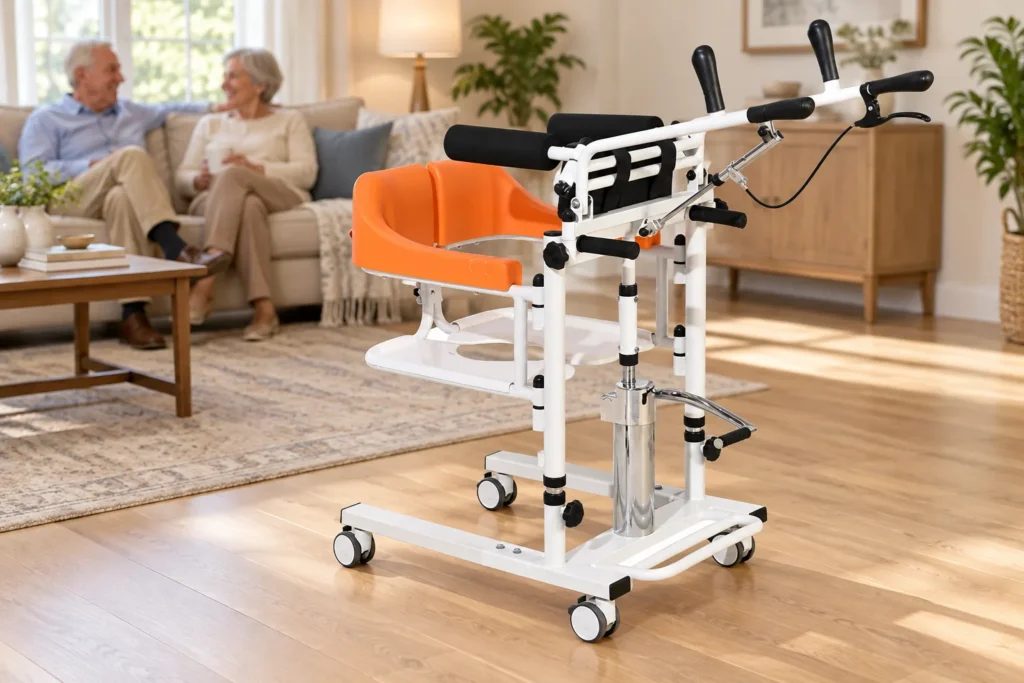
You can use this transfer and commode chair as a starting point for comparing the available configuration with your household’s needs. Confirm its dimensions, included components, and intended uses before ordering.
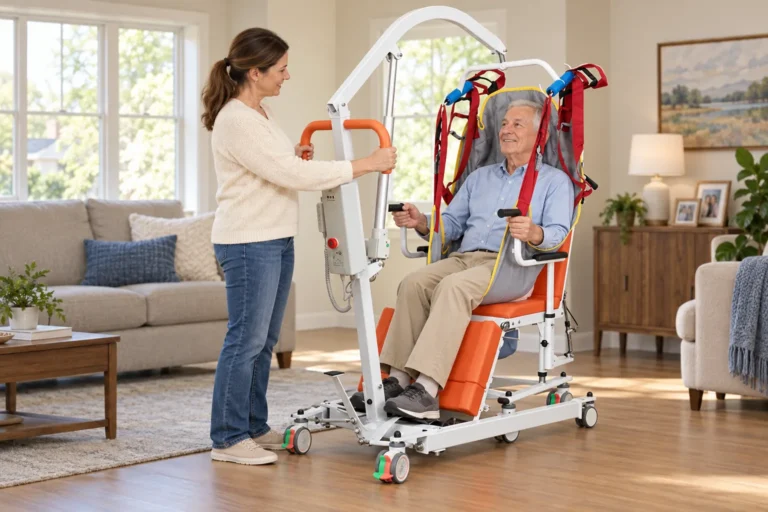
For equipment that lifts a person, patient-lift safety guidance emphasizes operator training, manufacturer instructions, and applicable weight limits. Arrange model-specific guidance before use.
The goal is a considered choice that fits the person, the home, and the people providing care. Keep your questions together in one note so every option is compared against the same everyday priorities.